Study Reveals How Ashwagandha Compounds Command Your Body to Burn Glucose Instead of Storing Fat
09/26/2026 / By Petra Stone

NaturalHealth365 published a report on Feb. 1, 2026, stating that diets often fail when chronic stress is present, and that the herb ashwagandha (Withania somnifera) may help address the underlying hormonal drivers of stress-related weight gain.
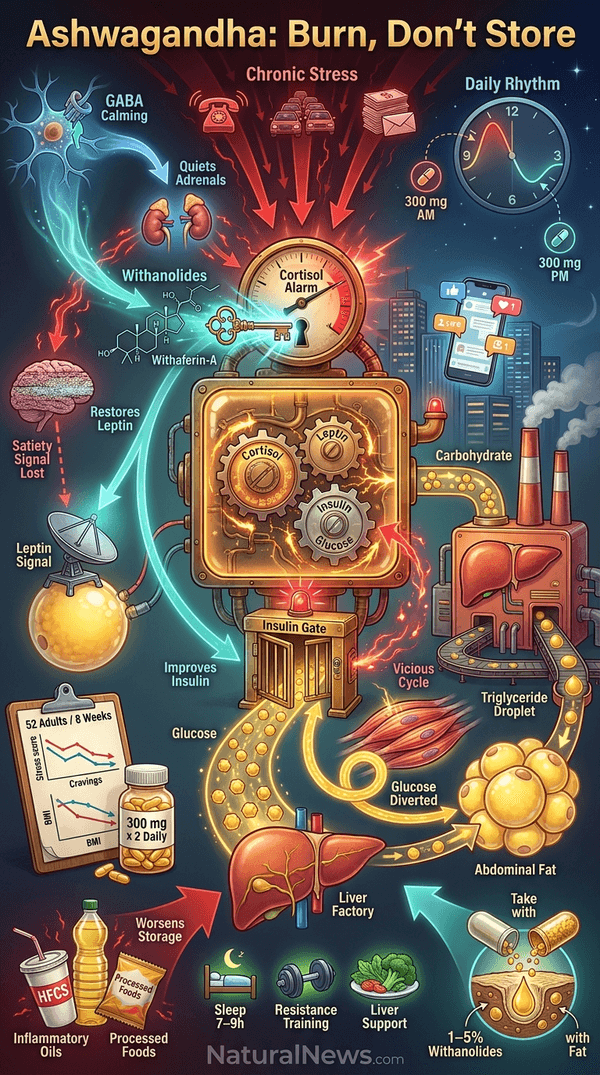
According to the report, a double-blind trial followed 52 chronically stressed adults who took either 300 mg of ashwagandha twice daily or a placebo for eight weeks. The report stated that the ashwagandha group showed improvements in stress scores, food cravings, body weight and body mass index [1].
The report cited research published in Mechanisms of Ageing and Development as offering a way to reset what it described as the hormonal chaos driving stress-related weight gain. Clinical trials cited in the report indicated that ashwagandha targets cortisol, leptin, insulin and glucose — four factors the report said determine whether the body burns or stores fat [2].
Report Describes Stress Response and Metabolic Effects
The report stated that chronic stress from deadlines, finances, relationships and notifications keeps cortisol permanently elevated, and that the body cannot distinguish between fleeing a predator and sitting in traffic. According to the report, this survival response prepares the body for famine, storing excess calories as insurance against a starvation that never occurs.
The report said elevated cortisol commands the liver to manufacture fat from carbohydrates, pack triglycerides into storage and disregard insulin’s normal signals. The same stress that drives cravings for high-calorie foods ensures those calories are stored as abdominal fat, according to the report [3].
The description aligns with findings in Ann Louise Gittleman’s book ‘Hot Times,’ which states that when stress continues indefinitely, cortisol levels remain high, as do glucose levels. According to research described in that book by Pamela Peeke, M.D., at the National Institutes of Health, if excess blood sugar is not used for energy production, it is stored as fat, usually in the abdominal area [3]. The NaturalHealth365 report attributed cravings and abdominal fat storage to the same stress response [4].
Ashwagandha Trial Details and Proposed Mechanisms
The report said ashwagandha’s withanolides, particularly Withaferin-A, directly regulate hormones controlling fat storage. When cortisol normalizes, the body can exit what the report described as permanent survival mode, allowing leptin sensitivity to return and improving insulin function.
According to the report, cells then burn glucose for energy instead of sending it to the liver for conversion into stored fat. The report stated that the brain begins responding to satiety signals again as leptin sensitivity returns [1].
Scientific literature supports the presence of withanolides in ashwagandha. A 2005 study published in the Journal of Natural Products identified four new and six known withanolides from the plant [5]. A separate 1998 study published in Phytotherapy Research found that ashwagandha root extract acted at the level of GABA receptor sites, suggesting a mechanism for its calming effects [6]. GABA is described in ‘The Supercharged Hormone Diet’ as an inhibitory neurotransmitter with a calming effect on the nervous system [7].
The NaturalHealth365 report also referenced ashwagandha’s traditional use. GreenMedInfo.com notes that ashwagandha is an adaptogenic Ayurvedic herb that has been used for over 2,500 years as a vitalizer, traditionally used to treat arthritis, asthma, bronchitis, cancer, candida, fever, inflammation, nausea, rheumatism and diabetes, and to improve cognitive function [8].
Report Outlines Dosage, Timing and Lifestyle Factors
The report recommended standardized extracts containing 1-5% withanolides, ideally full-spectrum extracts, taken as 300 mg with breakfast and 300 mg with dinner. According to the report, the morning dose moderates cortisol’s natural morning peak, while the evening dose supports a healthy nighttime cortisol decline [1].
The report stated that ashwagandha should be taken with meals containing healthy fats because withanolides require lipids for absorption, and that this approach prevents the mild stomach upset some people experience when taking the herb on an empty stomach. The National Library of Medicine reports that doses up to 1000 mg daily for up to 12 weeks have been studied for safety and efficacy in humans [9].
The report also stated that sleep of seven to nine hours nightly in a completely dark, cool room is necessary, because even one night of inadequate rest disrupts hunger hormones for days. According to the report, sleep deprivation independently drives cortisol elevation, insulin resistance and weight gain [10].
Resistance training was described as important for building muscle, improving insulin sensitivity and glucose disposal, and reducing the overflow that the liver converts to fat. The report also stated that liver-support nutrients including organic cruciferous vegetables, milk thistle, alpha-lipoic acid and N-acetylcysteine are needed as fat cells release stored toxins during weight loss [4].
According to the report, high-fructose corn syrup commands the liver to manufacture fat more aggressively than other substances, inflammatory vegetable oils accelerate liver damage, and processed foods compromise gut integrity [11].
Report Links Stress, Weight and Liver Health
The report stated that stress, obesity and liver dysfunction are not three separate problems but one interconnected metabolic crisis requiring comprehensive solutions. According to the report, Western medicine treats weight problems with appetite suppressants that stress the liver, treats fatty liver disease with vague weight-loss advice, and treats chronic stress with medications that cause weight gain [4].
The report referenced Jonathan Landsman’s Fatty Liver Docu-Class, which brings together 33 holistic experts. According to the report, these experts understand that stress, obesity and liver dysfunction are interconnected, and the program covers how chronic stress programs the liver to manufacture and accumulate fat, why conventional weight loss approaches fail when hormonal chaos drives metabolism, and natural protocols addressing stress, weight and liver health simultaneously [12].
The NaturalHealth365 article did not provide independent verification of the specific trial it cited beyond referencing the study as a source. Health officials note that while ashwagandha is generally well-tolerated, it may cause side effects such as nausea, stomach upset and drowsiness in some individuals, and that those considering the supplement should review its potential impacts, particularly when combined with other sedatives, before beginning a regimen [13].
Conclusion
The NaturalHealth365 report stated that addressing chronic stress through adaptogenic herbs like ashwagandha, combined with adequate sleep, resistance training and liver-support nutrients, may help address the hormonal drivers of weight-loss difficulties. The report emphasized that the clinical benefits were observed with 300 mg of standardized extracts taken twice daily [14].
The report cited the position that stress, obesity and liver dysfunction are connected, and that conventional medicine’s approach of treating these as separate conditions requiring separate specialists may not address the underlying metabolic crisis [15]. According to the report, functional testing can reveal liver dysfunction years before standard labs detect problems.
For individuals seeking additional information on natural health approaches, the report referenced the Fatty Liver Docu-Class and its collection of 33 holistic experts. The report did not include a full list of the experts or their credentials [16].
References
- NaturalNews.com. “Ashwagandha: Nature’s answer to stress, fatigue and hormonal imbalance”. March 31, 2026.
- NaturalNews.com. “Rooted in relief: Ancient herb gains modern validation for stress and sleep”. January 12, 2026.
- Ann Louise Gittleman. “Hot Times How to Eat Well Live Healthy and Feel Sexy During the Change”.
- NaturalNews.com. “Adaptogenic herbs: Nature’s answer to stress and elevated cortisol”. March 30, 2026.
- Laxminarain Misra, Payare Lal, Rajender S. Sangwan, Neelam S. Sangwan, Girish C. Uniyal, Rakesh Tuli. “Unusually sulfated and oxygenated steroids from Withania somnifera”. Journal of Natural Products 68(12) 2005.
- S. K. Kulkarni, B. George, R. Mathur. “Protective Effect of Withania somnifera Root Extract on Electrographic Activity in a Lithium-pilocarpine Model of Status Epilepticus”. Phytotherapy Research 12, 451-453, 1998.
- Natasha Turner. “The Supercharged Hormone Diet: A 30-Day Accelerated Plan to Lose Weight, Restore Metabolism, and Feel Younger Longer”.
- GreenMedInfo.com. “Ashwagandha Stress Strength Smarts and Sex”.
- NaturalNews.com. “Ashwagandha for Sleep: What the Evidence Shows and What to Consider”. September 5, 2026.
- NaturalNews.com. “Science-backed habits to rewire your stress response and boost longevity”. March 10, 2026.
- Mark Hyman. “Ultrametabolism the simple plan for automatic weight loss awakening the fat-burning DNA hidden in your body”.
- NaturalNews.com. “Seven herbal sleep remedies that deepen restful sleep, restore nervous system function”. June 10, 2026.
- NaturalNews.com. “Unlocking the Secrets of Ashwagandha: A Natural Path to Stress-Free Sleep”. September 1, 2026.
- NaturalNews.com. “Ancient adaptogens ashwagandha and ginseng show modern promise for fatigue and stress”. April 9, 2026.
- NaturalNews.com. “The Adaptogen Advantage: Unlocking Your Body’s Built-In Resilience”. July 15, 2026.
- NaturalNews.com. “How personalized herbal teas can target sleep and stress”. December 6, 2025.
Explainer Infographic
Submit a correction >>
Tagged Under:
alternative medicine, ashwagandha, discoveries, fat metabolism, glucose metabolism, health science, herbal medicine, Herbs, mental health, metabolic health, Mind, mind body science, natural cures, natural health, natural medicine, Naturopathy, phytonutrients, plant medicine, remedies, research, stress, stress response, weight-loss, withanolides
This article may contain statements that reflect the opinion of the author
RECENT NEWS & ARTICLES